top of page


Surface Prep & Bond Quality
-
Hollow Sounds (The "Chain Drag" or Tap Test): Dragging a chain or tapping the restored area with a hammer to listen for a hollow sound, which indicates a failure to bond (delamination) between the old concrete and the new patch.
-
Feather-Edge Cracking: Checking if the contractor properly square-cut the edges of the repair area ($1/4$ inch minimum depth) rather than "feather-edging" it, which causes the new cement to flake off.
-
Exposed Rebar Integrity: Verifying that any corroded steel rebar encountered during the repair was fully sandblasted, coated with an anti-corrosion primer, and completely encapsulated by the new concrete.
Joints & Sealants
-
Expansion Joint Alignment: Ensuring structural expansion joints were correctly replicated through the patch, rather than being paved over. Paving over a joint guarantees the concrete will crack.
-
Sealant Bead Integrity: Inspecting the flexible polyurethane or silicone caulking in the joints for gaps, bubbles, or peeling, which would allow water to seep under the new repair.
-
Waterproof Coatings: If a traffic topper or waterproof membrane was applied over the restoration (common in parking decks), checking for even thickness, pinholes, or bubbling.
Signs Of Failure
Finish, Texturing, & Geometry
-
Slope and Drainage: Ensuring the restored surface is correctly sloped to guide water toward drains. Standard concrete restoration should never create new puddles or "pond" water.
-
Texture Match (Slip Resistance): Verifying that the finish (broom finish, stamped, or troweled) matches the surrounding area and provides adequate traction to prevent slip-and-fall liabilities.
-
Flush Transitions: Checking that the seams between the old concrete and the new patch are completely flush to prevent tripping hazards.
Curing & Material Cracking
-
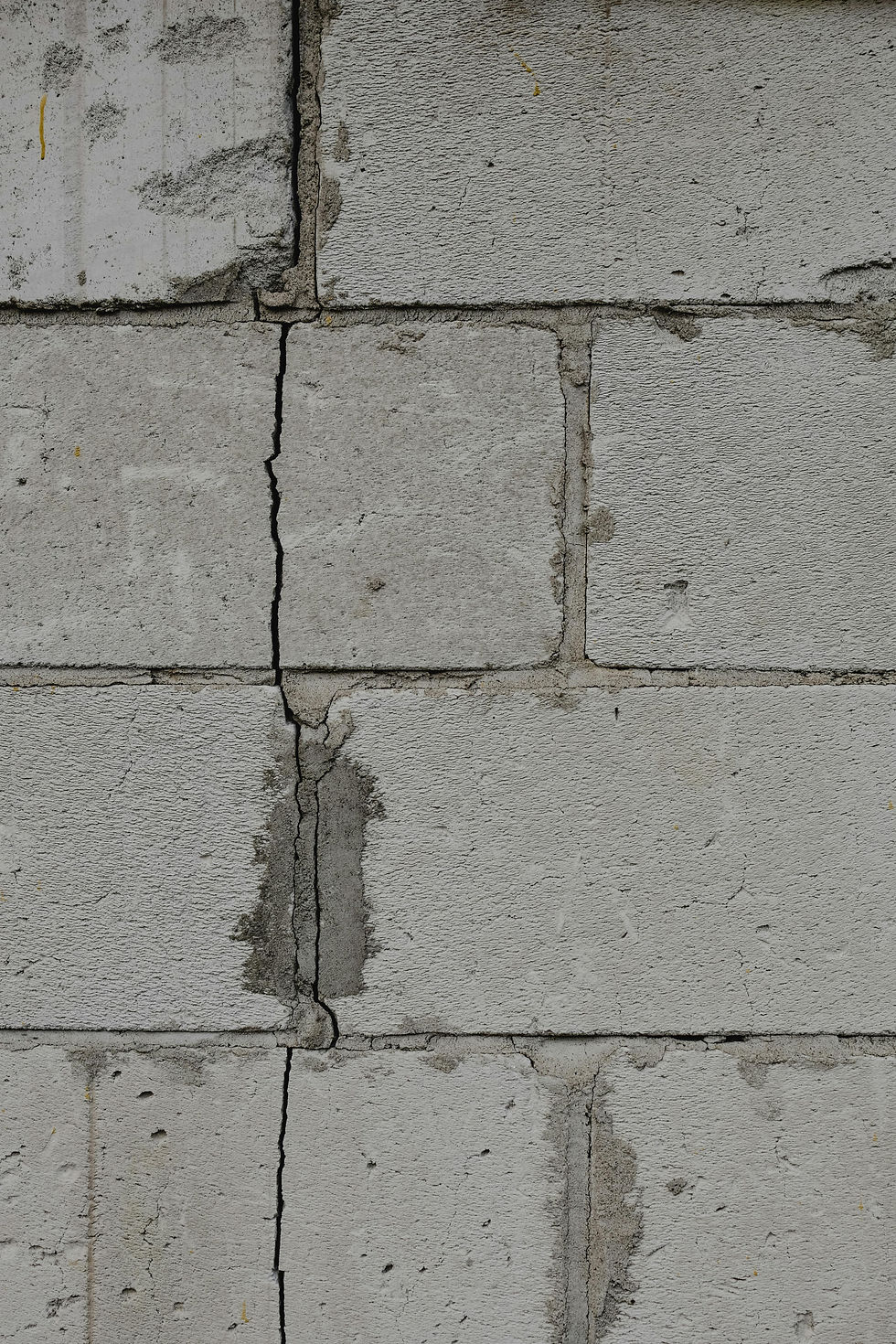
Shrinkage Cracks: Looking for hairline cracks that form within the first few days, signaling that the concrete dried out too fast because it wasn't kept moist or cured properly.
-
Color Uniformity: While new concrete rarely matches decades-old concrete perfectly, owners look to ensure the mix is consistent across the project and hasn't cured into blotchy, drastically different shades.
-
Honeycombing: Pockets of exposed aggregate or voids on the sides of newly poured forms, which happen if the concrete wasn't vibrated properly to settle the mix.
Cleanup & Site Condition
-
Over-spray and Splatter: Checking adjacent walls, vehicles, landscaping, and windows for dried concrete splatter or sealant stains that the crew failed to protect.
-
Slurry Management: Ensuring concrete wash-out and slurry were disposed of legally and didn't clog the property's storm drains.
bottom of page